

The North West does not ease gently into autumn. One week the gutters are dry and the roof is baking, the next a low sweeps in off the Irish Sea and every weak spot up there makes itself known. Leaves come down, the rain arrives in earnest and the first named storm of the season is rarely far behind. A little preparation in September saves a great deal of trouble in October and November. This guide walks you through five practical jobs that get your roof and gutters ready before the weather turns, and explains which of them you can safely handle yourself.
When autumn weather usually arrives in the North West
Across Wigan, Warrington, Bolton and out towards the Peak District, the change tends to come in the second half of September. Daytime temperatures drop, the first heavy leaf fall starts in early October and rainfall climbs steadily through to December. The Met Office storm naming season begins on 1 September each year, and named storms have reached our part of the country before the month is out on more than one occasion. October and November are consistently the wettest and windiest months on our patch.
That gives you a window of a few weeks right now to sort the small things, while the weather is still kind enough to work in and local roofers are not yet booked solid with emergency call-outs.
1Step 1Clear gutters and downpipes
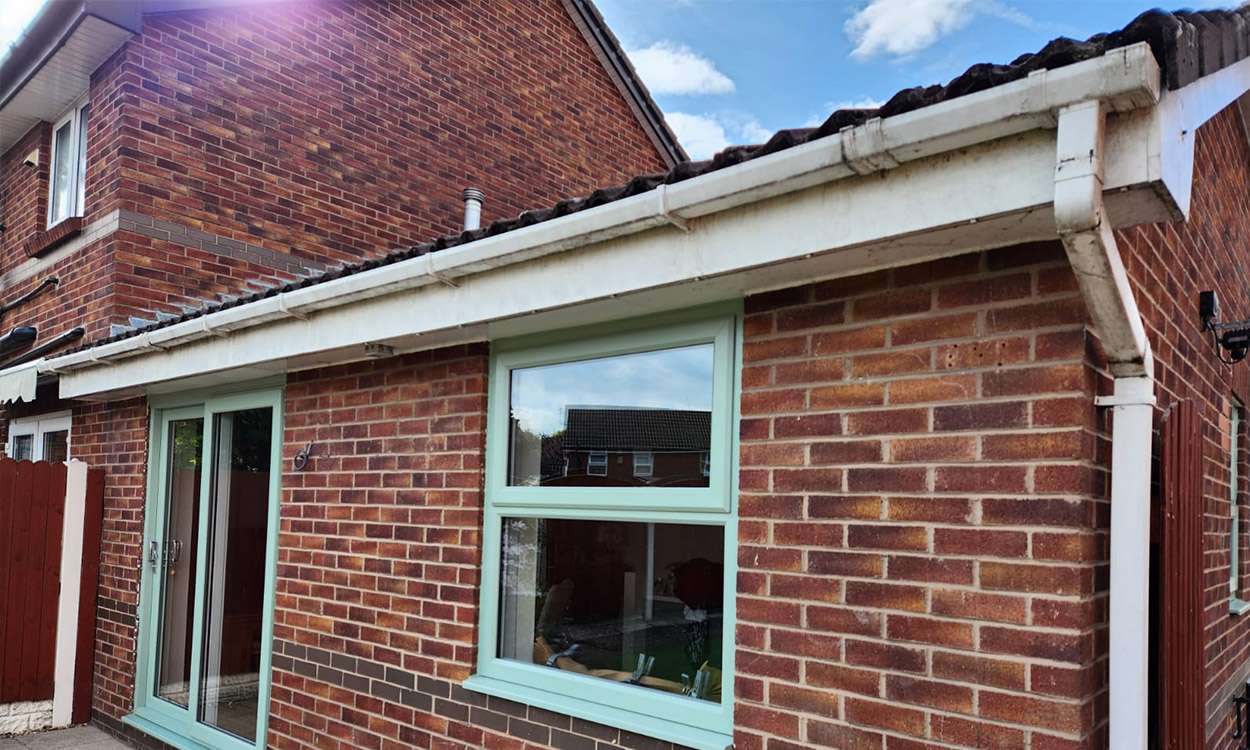
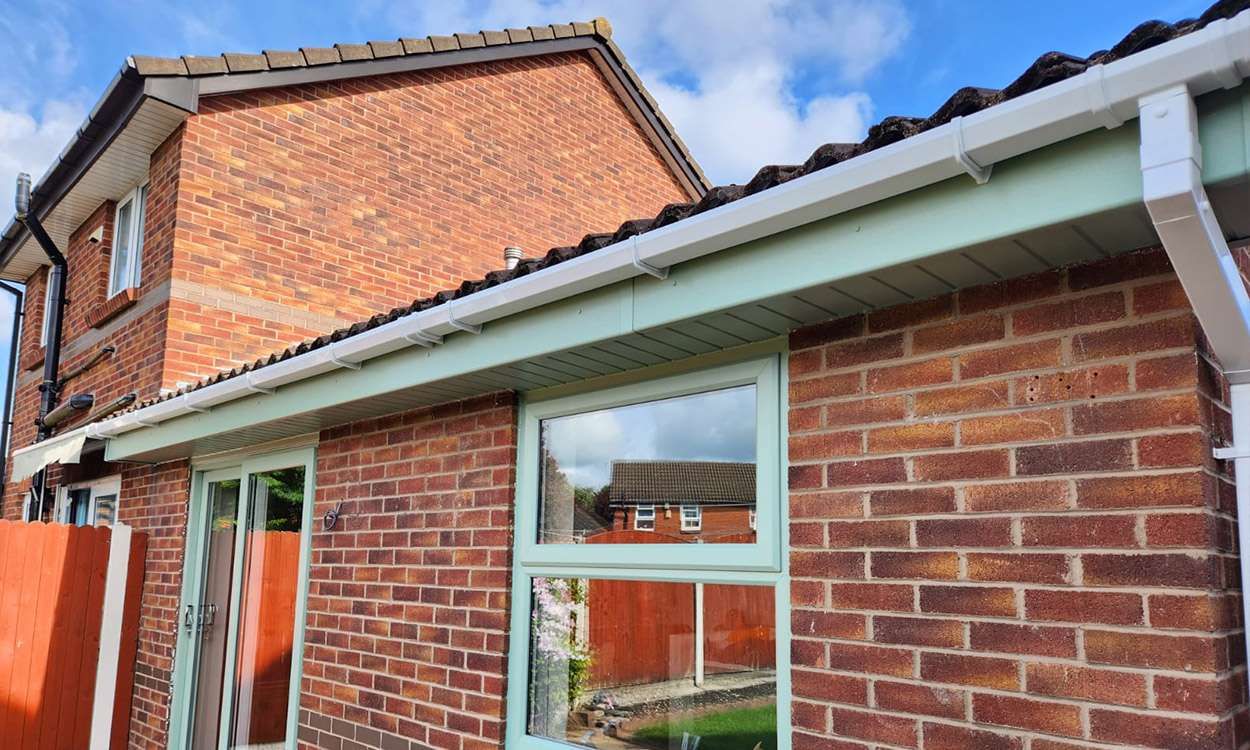
Gutters are the front line. Over a single autumn they carry thousands of litres of water away from your walls, and one blockage sends all of it down the brickwork instead. Look for moss, silt, leaves and the odd tennis ball, and pay particular attention to the outlets where the gutter meets the downpipe, because that is where blockages form first. From ground level, a run of gutter that overflows in rain, sags between its brackets or leaves green streaks on the wall below is telling you something.
Clearing is a job you can do from a ladder if you are confident, the ground is firm and someone is footing it for you. If the gutters are high, the house is a terrace with awkward access or the plastic itself is cracked and pulling away from the fascia, leave it to a professional. Our guttering team clears, repairs and replaces UPVC guttering across the North West, and a full clear and check takes less than a morning on most homes.
2Step 2Check ridge tiles and verges
The ridge along the top of the roof and the verges down the gable ends take the brunt of the wind. On older homes they are bedded in mortar, and mortar does not last forever. From the pavement or garden, look for ridge tiles that sit unevenly, gaps where mortar has dropped out and crumbled fragments in the gutter or on the ground below.
A loose ridge tile in September becomes a missing ridge tile in November, and a missing one lets the rain straight into the loft.
If the mortar is failing, patching it is a short-term fix at best. A dry ridge system fixes each tile mechanically to the roof and needs no mortar at all, so there is nothing to crack or wash out. It is now the standard we fit on re-roofs and ridge repairs alike, and it is the reason a properly fitted ridge shrugs off the sort of gusts that strip a mortar one.

3Step 3Inspect flat roofs for splits and pooling
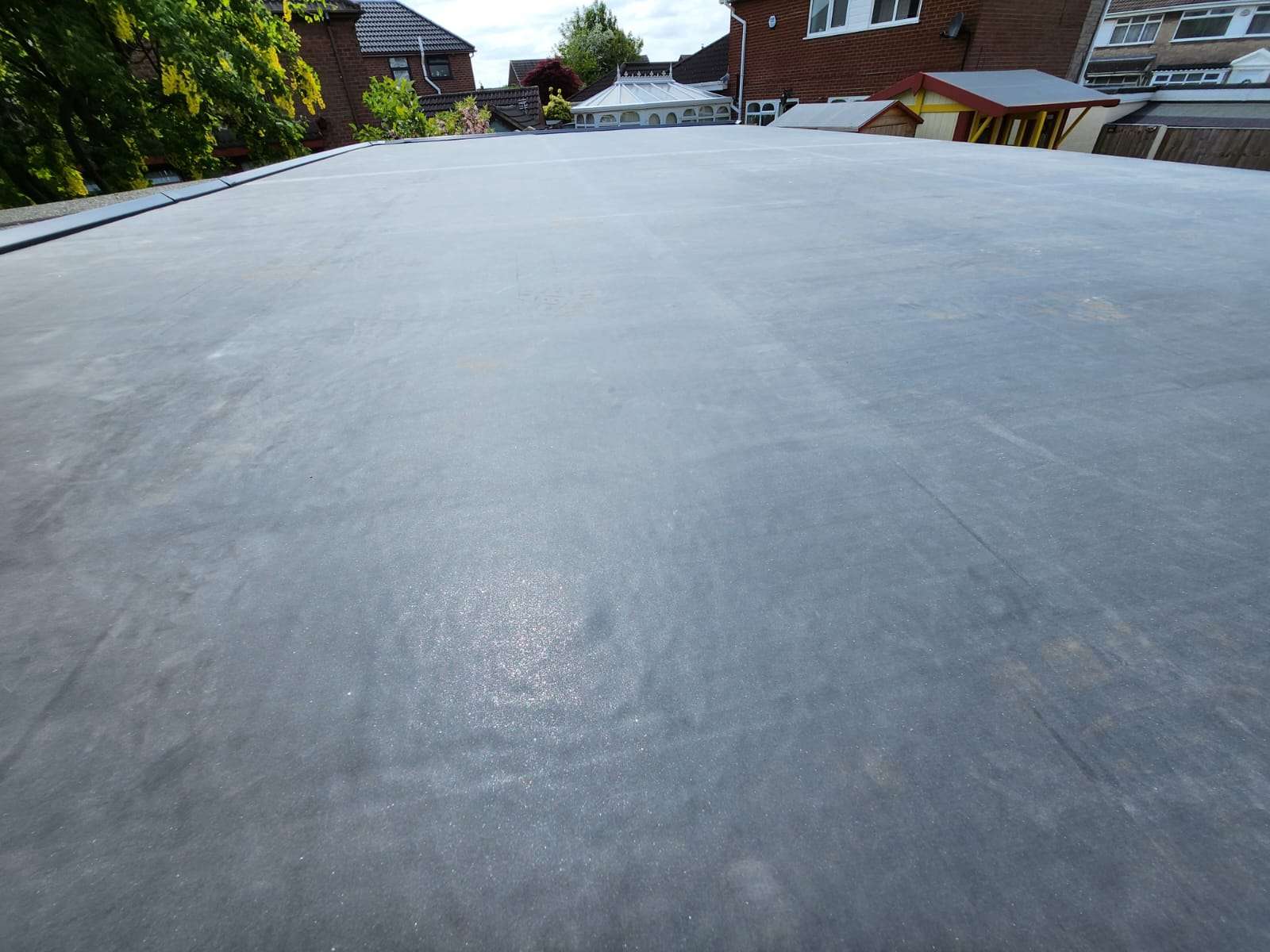
Garages, extensions and dormers usually carry a flat roof, and flat roofs suffer quietly. Have a look the day after the next heavy rain. Water still sitting on the surface points to a blocked outlet or a sag in the deck. Splits along the seams, bubbles in felt, cracks around the upstands where the roof meets a wall and lifted edge trims are all early warnings that are cheap to deal with now and expensive to deal with in December.
Leaves are a particular problem on a flat roof because they settle on the outlets first. Sweep them off if you can safely reach, and clear the outlet grilles. Anything beyond a light clean is a job for a roofer. Our flat roofing page explains the EPDM, GRP and felt systems we work with, and when a repair makes more sense than a replacement.
4Step 4Trim back overhanging trees
Trees are the biggest source of blocked gutters and one of the most common causes of storm damage. Branches that scrape the tiles in a wind lift and crack them, and every leaf within reach of the roofline ends up in the gutter. Cut back anything overhanging the roof before the leaves drop, and check that you own the tree or have your neighbour’s agreement first.
If the tree carries a preservation order or you live in a conservation area, which is common in Peak District villages, you will need permission from the council before any work. Where trees cannot be cut back, gutter guards or a more frequent clearing schedule are the practical answer.
5Step 5Have a contact ready for emergency repairs
Even a well-prepared roof can lose a tile in a severe storm. The difference between a small repair and a soaked ceiling is usually how quickly someone gets up there. Save the number of a local roofer now, before you need it, and check that they genuinely cover your area. Keep your home insurance details to hand and take a few photos of the roof, the gutters and any flat roof areas while everything is in good order. If damage does happen, those photos make a claim far simpler.
TRS Roofing & Guttering covers Wigan, Warrington, Bolton, Leigh and the wider North West, out to Buxton, Bakewell and Matlock in the Peaks. You can see the full list on our areas we cover page, and our line is open when the weather does its worst.
Free roof health checks across Wigan, Warrington and the Peaks
If you would rather not go up a ladder, or you have spotted something on this list that does not look right, we will come and take a look. A TRS autumn roof check is free and there is no obligation. We inspect the roof covering, ridge and verges, gutters, fascias and any flat roofing, then give you a plain written summary of what needs doing now, what can wait and what is fine as it is.

Most checks are booked within a few days at this time of year, and the earlier you call, the more choice you have before the storm season fills the diary. Call us on 0800 956 7199, email info@trsplastics.co.uk or send your details through our contact page and we will be in touch to arrange a time.
Book an autumn roof check
Call 0800 956 7199 or book your free check online.